An interview with Jess Wenick, Refuge Project Leader, edited and condensed for clarity

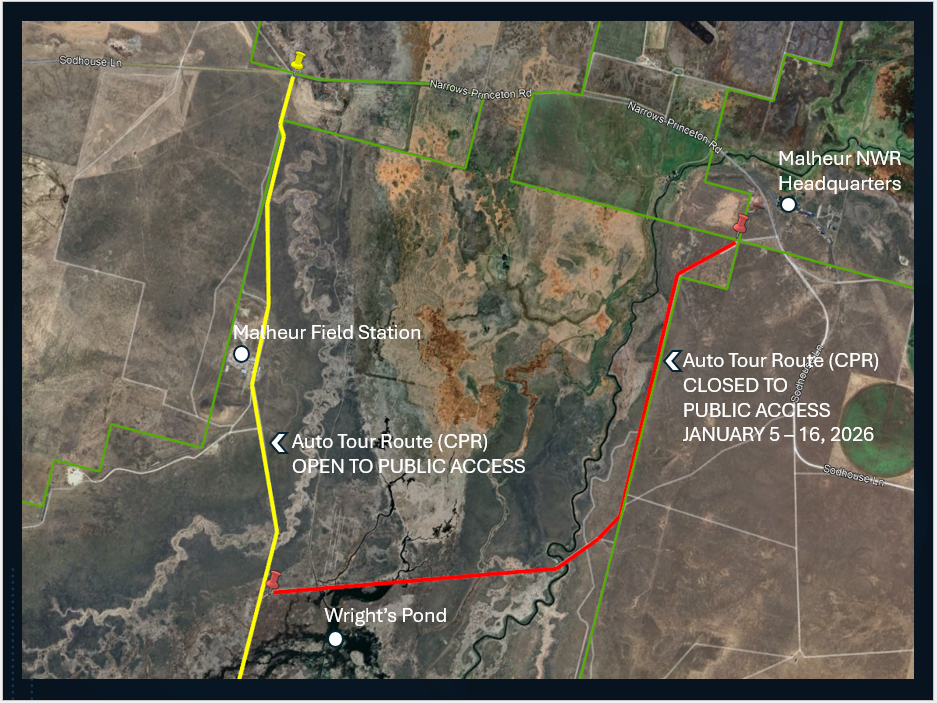
Approximately 30 years ago, or maybe more, there was a push for Malheur Refuge to have a visitor canoe opportunity along the Blitzen River, with the put-in near Rattlesnake Butte and the takeout in the northern Blitzen Valley (see map). Unfortunately, with water levels often too low to allow for canoeing, the effort was abandoned.
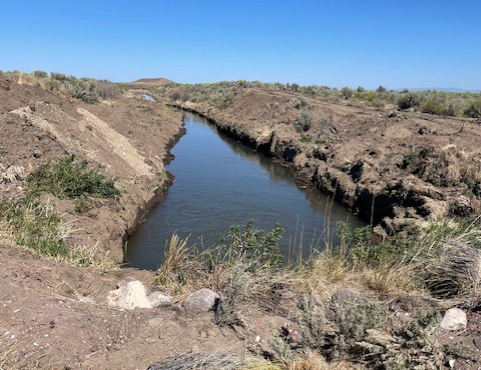
But the name for the location stuck: Canoe Takeout. Around that same period, Refuge Maintenance staff created a ditch there with the goal of delivering water to wetlands up north. Along with the ditch the Refuge staff created a diversion dam, Dunn Dam, to raise water levels high enough to reach the ditch and flow north.
After 30-plus years, Dunn Dam was showing its age. It didn’t have adequate fish passage around it, and it was a safety hazard. We gradually had to stop using it, which essentially meant we lost the ability to irrigate about 2,500 acres of wetlands. So, in 2024-25 we removed the dam completely and replaced it with a series of rock weirs, basically a rock shelf in the stream itself, designed to a certain height and carefully engineered by Ducks Unlimited. Those weirs allow easy fish passage through and over them, as well as backing up this portion of the river, making it possible for us to divert water from here. Eventually we’ll have the ability to push water north to irrigate Wright’s pond, cross Sodhouse Lane, and get into the Refuge meadows on the north side of Sodhouse Lane. The diverted water can also wrap around to wetlands that are west of the CPR at this point. In a good water year, this diversion will help us irrigate from the north while also irrigating from the south.
The removal of Dunn Dam also happened to coincide with a Ducks Unlimited project to install a fish screen at this location. The fish screen project is Phase 2 of the weir effort. Thanks to the efforts of Ashley Tunstall at Ducks Unlimited, funding was secured for the fish screen—more than $600,000, I believe—and it will be installed this fall.
Through this funding we’re also able to bring aboard a Burns Paiute tribal liaison to assist with on-site cultural monitoring of the excavation.
It has taken a true team effort, bringing together USFWS Regional infrastructure support, Ducks Unlimited, our USFWS Water Resources staff, ODFW, and others to address fish screening needs and related water rights at the Canoe Takeout Diversion. The work has been complex, but it has also been encouraging. When many partners bring their expertise to the table and align around a shared goal, the results can be far bigger than any one piece of the project.